Your home’s siding does a lot of work. Day in and day out, it stands between your walls and everything the weather throws at it: rain, sleet, ice, summer heat, wind, and everything in between. Most homeowners don’t think much about siding until something obvious goes wrong. But by the time you notice a problem with the naked eye, the siding has usually been struggling for a while.
Knowing when to move forward with a siding replacement can save you from a much bigger, more expensive headache down the road. The tricky part is that siding damage doesn’t always announce itself dramatically. Sometimes it whispers first.
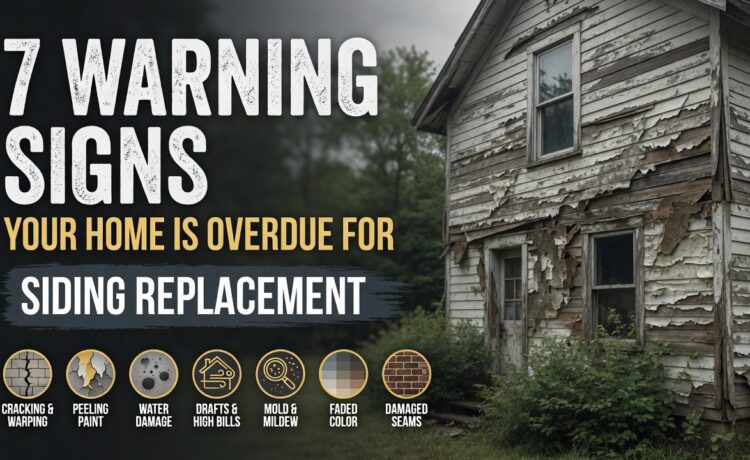
Here are seven warning signs that your home’s siding is telling you it’s time to go.
1. Your Paint or Wallpaper Is Bubbling on the Inside
This one surprises a lot of homeowners because it starts indoors, not outside. If you’re noticing paint bubbling, wallpaper pulling away from the wall, or a soft, spongy feel to your interior walls, moisture is likely the culprit. And if moisture is getting into your walls, there’s a good chance it’s entering through your siding.
Siding is designed to shed water away from the structure of your home. When it starts to fail, whether through cracks, gaps at the seams, or panels that have warped and pulled away, water finds a way in. Once it’s inside your wall cavity, it doesn’t just evaporate. It sits there, feeding mold and slowly breaking down the wood structure underneath.
By the time you see it affecting your interior walls, the damage behind the siding may already be significant. That’s why interior moisture signs are worth taking seriously and not just patching over.
2. You’re Constantly Repainting
Properly installed, good-quality siding should hold paint for somewhere around eight to ten years before it needs a fresh coat. If you find yourself repainting every four or five years because the paint keeps fading, chipping, or peeling, the siding itself is likely to blame.
Paint that won’t stick or won’t last is often a symptom of moisture cycling through the siding material. The panels are absorbing water, swelling slightly, then drying out, and that movement makes it nearly impossible for paint to maintain a bond for any reasonable length of time.
This is an easy warning sign to overlook because homeowners often chalk it up to cheap paint or sun exposure. But if the problem keeps coming back in the same spots, look a little closer at what’s behind the paint.
3. You’re Noticing Higher Heating and Cooling Bills
Siding isn’t insulation, but it does play a role in how well your home holds temperature. When siding begins to fail, especially if it’s older and was installed without a proper weather barrier underneath, your home starts to lose its thermal efficiency.
Drafts can sneak in through gaps and cracks. Cold air seeps into wall cavities during winter. Heat pushes through in summer. Your HVAC system works harder to compensate, and your utility bills climb.
If your energy costs have been creeping up and you can’t point to a clear reason, it’s worth having a contractor look at the condition of your siding and the weather barrier beneath it. Sometimes what looks like a heating system problem is actually an exterior envelope problem.
4. The Siding Is Visibly Cracked, Warped, or Loose
This one feels obvious, but homeowners often underestimate how much a few cracked or warped panels matter. It’s tempting to think, “It’s just a couple of spots, the rest of the siding looks fine.” But siding failures rarely stay contained to one area.
Cracked panels let in moisture and pests. Warped panels create gaps where water can travel behind the siding. Loose panels, especially at the bottom of the wall or around windows and doors, are an open invitation for water intrusion.
The other thing to watch for is siding that is starting to pull away from the wall at the seams or around trim pieces. Those gaps are often small at first, but they grow with each freeze-thaw cycle and each rain event. A small gap this fall can be a significant opening by spring.
5. You’re Seeing Mold, Mildew, or Fungal Growth
Some algae on siding is cosmetic and relatively harmless. It happens, especially in shaded, humid areas. A good cleaning can handle surface-level growth. But when you start seeing mold or mildew appearing in the same spots repeatedly, or fungal growth that seems to be spreading from within the siding panels rather than sitting on top of them, that tells a different story.
Mold needs moisture to grow. Persistent, recurring mold on siding panels is a strong signal that moisture is getting trapped in or behind the material. This is especially worth paying attention to with older wood siding, where fungal growth can indicate that the underlying wood has been compromised.
If the mold keeps coming back within a season of cleaning it, the siding is likely holding or channeling moisture in a way that cleaning alone will never fix.
6. The Siding Is More Than 20 to 25 Years Old
Different siding materials have different lifespans. Vinyl siding, when properly installed and maintained, can last 20 to 40 years depending on the product quality and climate exposure. Wood siding that hasn’t been consistently maintained often starts showing significant wear well before the 20-year mark. Fiber cement is more durable and can last longer, but it still has a service life.
If your siding is pushing 20 to 25 years old or more, it’s worth having it assessed even if it looks okay from the street. Older siding may be nearing the end of its effective life even without dramatic visible symptoms. It may also predate the use of modern moisture barriers and installation methods that significantly improve how siding protects the home.
Getting a professional assessment before problems become obvious puts you in a much better position to plan and budget, rather than reacting to a crisis.
7. There Is Dry Rot in the Panels or Underneath Them
Dry rot is one of those things that sounds minor and isn’t. The name is a little misleading because the rot is actually caused by moisture, but by the time you can visibly see or poke at dry rot in a siding panel, the damage has often spread well beyond what’s visible on the surface.
To check for dry rot, press on siding panels with your fingertip, particularly around the base of the wall, near windows, and at corners. Sound, solid siding should feel firm. If panels feel soft, spongy, or crumble slightly under pressure, dry rot has set in. In more advanced cases, you may see the siding begin to flake, split, or discolor with a brownish, block-like pattern.
Dry rot doesn’t stop on its own. It continues to spread as long as moisture is present and there is organic material to consume. In severe cases, it can reach the sheathing and framing behind the siding, which turns a siding project into a structural repair project.
What to Do If You’re Seeing These Signs
None of these warning signs mean you should panic. But they do mean it’s time to stop watching and start acting. The longer deteriorating siding stays on your home, the more opportunity there is for moisture, pests, and cold air to compromise the structure underneath.
The smart move is to have a qualified contractor walk the exterior of your home and give you an honest assessment. A good contractor will tell you whether repairs are a reasonable option or whether the extent of the damage and the age of the material make a full replacement the better long-term investment.
Siding is one of those projects that homeowners tend to delay because the house still looks okay from a distance. But “okay from the curb” and “protecting your home the way it should” are two different things. Your siding is worth a closer look.