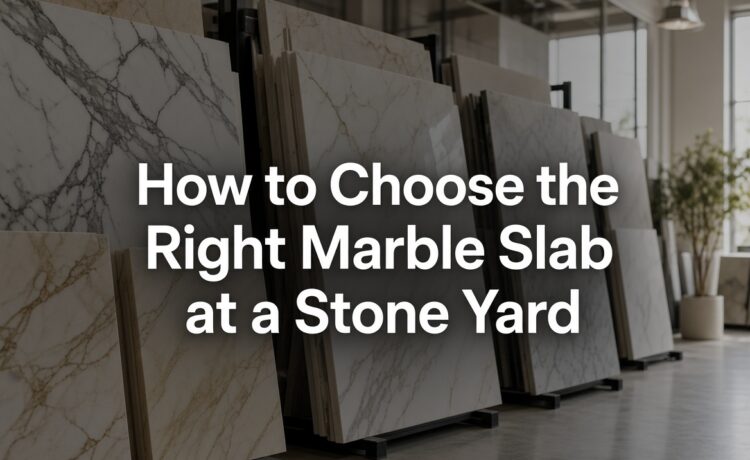
Walking into a stone yard for the first time can feel a bit much. There are rows of tall slabs, dozens of names you’ve never heard, and prices that swing a lot from one rack to the next. And marble is a natural stone, so no two slabs look the same. The one you pick is the one you’ll live with for years. That’s why it pays to slow down and know what to look for before you put a hold on anything. A good slab isn’t just pretty. It needs to fit your layout, your budget, and the way you use your kitchen or bathroom. This guide walks you through the whole process. It covers marble types, finishes, thickness, flaws, veining, layout, and the questions to ask the yard staff. By the end, you’ll know how to spot a good slab and avoid the mistakes that cost people money.
Do Your Homework Before the Visit
Don’t show up empty-handed. A stone yard visit goes much better when you bring the right things.
Bring:
- Rough measurements of every countertop area, including islands, backsplashes, and any full-height splash
- A simple sketch of the layout with sink and cooktop locations
- Samples of your cabinet color, flooring, and paint if you have them
- Photos of the space in daylight
- A budget range, including fabrication and installation, not just the slab
Also think about how you’ll use the space. Do you cook a lot? Do you have kids? Do you spill wine or lemon juice often? Marble is soft compared to granite or quartzite, and it reacts to acids. That doesn’t mean you shouldn’t buy it. It just means you should go in knowing what to expect.
Know the Common Marble Types
You’ll see a lot of names at the yard. Some are real varieties. Some are trade names the supplier made up. Here are the ones you’ll run into most:
- Carrara: white to light gray with soft, feathery gray veining. Usually the most affordable Italian marble.
- Calacatta: bright white with bold, thick veining in gray or gold. Costs more, sometimes a lot more.
- Statuario: very white with dramatic gray veins. Rare and priced high.
- Danby: quarried in Vermont. White with soft veining. Some people pick it because it tends to be a little tougher than many imported marbles.
- Emperador: brown tones with lighter veins. Warmer look.
- Nero Marquina: black with sharp white veins. Shows etching and water spots more easily.
- Crema Marfil: beige and creamy with light patterning.
Names aren’t always consistent between yards. One supplier’s “Calacatta Gold” might look very different from another’s. Judge the slab in front of you, not the name on the tag.
Make Sure It’s Actually Marble
This is a big one. Some stones sold as “marble” are really dolomite or quartzite. And some sold as quartzite are actually marble. The difference matters because quartzite is much harder and doesn’t etch the same way.
Ask the yard what the stone really is. If you’re unsure, ask if you can test a small sample at home:
- Scratch test: try scratching it with a steel knife. Marble scratches. True quartzite won’t.
- Etch test: put a little lemon juice or vinegar on it for 10 to 15 minutes. Marble will usually leave a dull spot.
Do these tests on a scrap or sample, never on a slab you haven’t bought.
Choose Between Polished and Honed
Most marble comes in two main finishes.
Polished is shiny and reflects light. It makes colors and veins look deeper. But etching shows up more clearly as dull spots on the shiny surface.
Honed has a matte, soft look. Etching still happens, but it blends in better because the whole surface is already dull. Honed marble can show stains a bit more, so sealing matters.
Many people choose honed for kitchens and polished for bathrooms or low-use areas. There’s no wrong choice. Just pick the one you’ll be happy living with.
Some yards also offer leathered or brushed finishes. These have a slight texture and hide wear well.
Pick the Right Thickness
Slabs usually come in two thicknesses:
- 2 cm (about 3/4 inch): lighter and cheaper. Often used for backsplashes, vanities, and walls. For countertops, it usually needs a plywood base or a built-up edge.
- 3 cm (about 1 1/4 inch): the most common choice for kitchen countertops in the US. Stronger and doesn’t need extra support in most cases.
If you want a thick, chunky edge, you can get it with a mitered edge on either thickness. Ask your fabricator what they recommend for your layout.
Look at the Full Slab, Not Just a Sample
Small samples don’t tell you much. Marble changes a lot across one slab. One corner might be mostly white. The other might have a wide gray vein running through it.
When you’re at the yard:
- Ask them to pull the slab out so you can see the whole face
- Step back several feet to see the overall pattern
- Walk up close to check details
- Look at it under different light if you can, since yard lighting can be harsh or dim
- Take photos and video of the full slab with your phone
If you need more than one slab, look at them side by side. Slabs from the same block (sometimes called a bundle or lot) will match much better than slabs from different blocks.
Check for Flaws and Repairs
All marble has some natural marks. That’s part of the look. But some flaws are worth noticing before you buy.
Look for:
- Cracks: a real break you can feel with your fingernail. These can weaken the slab.
- Fissures: natural lines that look like cracks but are usually stable. Ask the staff to help you tell the difference.
- Resin fills: many slabs are treated with resin to fill small pits and cracks. This is normal, but heavy filling can look cloudy or plastic.
- Mesh backing: a fiberglass mesh glued to the back for strength. Common and usually fine, but it can be a sign the slab is fragile.
- Color patches or stains: check for spots that look odd or don’t match the rest.
- Pitting: small holes in the surface, especially on polished slabs.
Flip your phone flashlight on and shine it across the surface at a low angle. It makes scratches, pits, and repairs much easier to see.
Think About Veining and Layout
Veining is a big part of why people choose marble. But it also makes layout harder.
Ask yourself:
- Do you want the veins to run along the length of the island, or across it?
- Will there be seams? Where?
- Do you want the veins to flow from one piece to the next?
Bookmatching is when two slabs cut from next to each other are opened like a book, so the pattern mirrors at the seam. It looks great on islands and backsplashes, but you need two matching slabs, which costs more.
Ask your fabricator about digital layout. Many shops can photograph your slab and lay your countertop templates over it on a screen. You get to see exactly which part of the slab goes where before anything is cut. If they don’t offer that, ask if you can be there when they mark the slab.
Visit More Than One Yard
Selection varies a lot from yard to yard. A homeowner looking into marble countertops cookeville may find a different mix of slabs than someone shopping in a bigger city like Nashville, so it’s worth checking a few places.
In smaller markets, people shopping for marble countertops crossville often work with fabricators who bring slabs in from larger distributors. That’s fine. Just ask whether you can see your actual slab before it’s cut, not just a photo from the supplier.
Questions to Ask the Yard Staff
Don’t be shy. The staff deal with this every day. Good questions include:
- What is this stone, technically? Marble, dolomite, or quartzite?
- Where was it quarried?
- How many slabs are in this lot?
- Has it been resin treated or mesh backed?
- How long can you hold it for me?
- Do I buy the slab here, or through my fabricator?
- Will I be charged for the whole slab or just what’s used?
That last point surprises people. In most cases, you pay for the full slab, even the leftover pieces. Ask if you can keep the remnants for a small table, shelf, or cutting board.
Understand What It Will Really Cost
The slab price is only part of the total. You’ll also pay for:
- Fabrication (cutting, edges, sink and cooktop cutouts)
- Installation
- Delivery
- Sealing
- Removal of old countertops
- Plumbing reconnection, in some cases
Get a written quote that lists everything. Prices can vary a lot between fabricators, even for the same slab.
Be Honest About Care
Marble needs more care than quartz or granite. It will etch if acids sit on it. It can stain if spills are left too long. And it will slowly develop a worn, lived-in look.
Some people love that. Others find it stressful. Before you commit, decide which one you are.
Basic care looks like this:
- Seal it when installed, then reseal as your fabricator recommends
- Wipe spills quickly, especially wine, coffee, citrus, and tomato
- Use cutting boards and trivets
- Clean with a pH-neutral stone cleaner, not vinegar or bleach
Final Thoughts
Choosing a marble slab takes some time, and that’s okay. Bring your measurements and samples. Look at the full slab. Check for flaws. Plan the layout before anything gets cut. And ask plenty of questions. If you do that, you’ll end up with a countertop you like looking at every day, not one you wish you’d looked at more closely.